Sunday, January 21, 2007


Friday, January 19, 2007
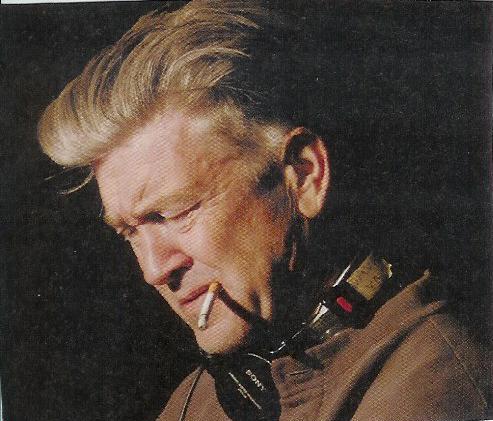
From The Grandmother to Mulholland Drive, David Lynch's body of work is incredible. Sure he's kind of weird, but he's bucked the Hollywood system (almost successfully) for years now and made a name for himself as one of the more unique directors on the planet. He can creep us out with something like Blue Velvet or Eraserhead but then give us The Straight Story, a heartwrenching tale of what ordinary citizens must do to overcome. I'm looking forward to his next, but why is it 3 hours long? And speaking of filmmakers, I hope this is Scorsese's year. He so like deserves something after Taxi Driver, Goodfellas, and Raging Bull. C'mon.
_______________
Ok, so Scorsese just won a Golden Globe. He deserves an Oscar or two at this point in his career. It's really mystifiying that he hasn't won anything all these years don't you think?
Wednesday, January 17, 2007
Heaven Beside Me
A heaven beside me is
revolving, a planet a window
a façade of confusion.
Poor landscape
a mouse with a pipe
playing electric ocarina
isolates my psyche
what an uncanny picnic
this sparkling silver air.
Like a first date or
skyscraper juggling a desert
there is a beauty to ice that
only a statue understands
O silence,
how we must
squeeze
restaurants
of their conversations.
List of Dances
Dominican merengue mania
Cambodian psychedelia
Gypsy marching band
French-Algerian rai
Balkan electrofolk
Flamenco thrash
Mexican cumbia
Mongolian punk
Ethiopian funk
Last call stagger
Cambodian psychedelia
Gypsy marching band
French-Algerian rai
Balkan electrofolk
Flamenco thrash
Mexican cumbia
Mongolian punk
Ethiopian funk
Last call stagger
Who is your celebrity lookalike? This is kind of funny. Whoa…not so funny. I don’t want to look like Carson Daly. TRY IT.
Between Reason and Desire
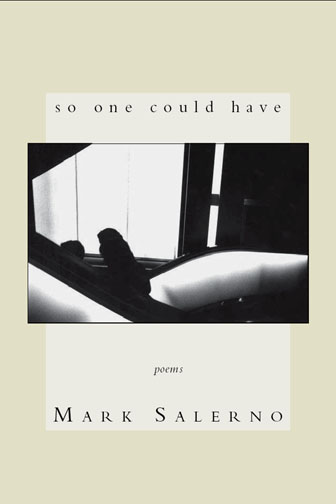
A review of
So One Could Have by Mark Salerno
ISBN 1-888996-86-2
In Mark Salerno’s latest book of poetry, So One Could Have, the
details pile up like the moments of an extraordinary day. What we have in this book is a casually scientific exegesis on the passage of time. In lesser hands this tall order might have become an exercise in tedium, but Salerno pulls this off in a most deceptively simple, and likable way.
Any given day, for most denizens of planet earth, is a harried series of moments. The challenge is to not only move through life with aplomb and accomplish something but also to add up these moments and decipher any supposed meaning. The relative aspect of human existence aside, good art is unflinchingly good at representing some facet of communal reality—without moralizing. This said reality may be represented as completely irrational and fantastic, banal and predictable, or somewhere uniquely in between, the skill lies in recording it faithfully and then stepping aside. Salerno is a subtle master of stepping aside. One thing that makes this book so interesting is Salerno’s use of caesura.
I used to be feeling now I am a penny arcade
(from “Small World,” p. 27)
These are poems that use monolithic pauses to accentuate and ground. Nearly after each observation comes a forceful void, which outlines the music of these lines like a Mondrian. Not that these poems are rigid or forced, they are in fact very fluid and faithful to the seemingly liquid quality that consciousness has. In “Pink’s” (p. 59) Salerno states
In seeing one thing we probably see many
wherein I gathered all my passing moments
to reconstruct a bibelot and a merely stupid
O befuddled longing O track of wonder
Salerno does seem to see many things at once and his poetry allows the reader to experience a similar luxury. This book is a photo lab of discrete stock-piled images. Salerno seems to instinctively know how to post-modernly question what most have accepted as foundations of Western humanism with the nonchalance of sleight-of-hand man.
we awake as good as another from dreams
I hate that Picasso and Newton screwed up
science and the Renaissance was a mistake
I love the light before the blue and the
time it takes to be here it is the role
(“Small World,” p. 27)
Salerno’s reticence is not overpowering, however. It seems to be more of beginning than an ending for him. His dispassionate attitude seems to be more of a harnessing of power and a summing up rather than a giving up or a defeat. These poems lie somewhere between despair and celebration in a middle ground that is somewhat mysterious. The inversion of thought and image in some of Salerno’s best lines lends his poetry in this volume a somewhat cinematic quality.
she said nice little town you got here
sheriff with eyes on the stranger logic
wanted the big hit the big grab and skip
over the border it’s a helluva country
to be modern in cottonwoods and damp cuffs
a building falls down but the sky stays put
(“Coda,” p. 69)
There is a disheveled beauty in the immediacy of this book, but the downside of that is sometimes this reviewer felt perhaps some of these lines rely a bit too much on the journalistic impulse. Usually, at these moments in So One Could Have, however, the poet’s idiosyncratic method serves to bring the reader quickly back around—whatever slack or uninteresting strophes are compensated for by another apt turn of phrase which surely follows.
This ebb and flow in Salerno’s new book provides a real sense of what is true of human consciousness. Existence entails a constant process of redefinition. This book achieves that superlatively.
Tuesday, January 16, 2007

Miracle of Apples
Someday the apples will be liberated, the pear
will start a revolution and the banana will
commit suicide, rather than be executed. In tense meetings,
the cantaloupe has come up with a new political system.
It exists at the center of an ovoid universe, on a long summer afternoon.
You dream of secret conversations that drip with sticky, pink juice.
Yesterday, the pomegranate gave a speech and received a
rousing ovation.
But at midnight, patrols of vegetables rode through town,
plastering posters of the banana on every available wall.
Grapes everywhere were deceived into joining the
knives, forks, dishes, mugs, and even a glass of wine.
Now dinner has descended upon me.
They will lead me to my ordinary death,
as real as the breath of a cannibal.
Lifer
Just listen at your
center for and
if the whir there
comforts drift
upon thought.
Small compasses
we were as if
but then catch
seeming shadows
above else.
Enormous burn
upon waves we
sift blisters as if
life were unnoticed.
Perception’s nexus
ices my afternoons
with more questions.
center for and
if the whir there
comforts drift
upon thought.
Small compasses
we were as if
but then catch
seeming shadows
above else.
Enormous burn
upon waves we
sift blisters as if
life were unnoticed.
Perception’s nexus
ices my afternoons
with more questions.
I’ve always found the art of Jean Dubuffet very interesting because of its seemingly primitive qualities. The adage “you have to know the rules to break them” really does apply in this circumstance, however, because in Dubuffet’s work, the childlike, simplistic nature of each piece eventually leads the viewer to reconsider what it is he or she is looking at and to rethink how our perception of a particular object exists in reality and in the abstract. This end is the result of effective process. When you think of the words “table” or “chair” it may very well be that a specific table or chair from memory comes to mind, but it’s more probable that one thinks of a nebulous, abstract idea of a table or chair. We’re transported by viewing art, and it’s the transformation that matters. Dubuffet’s work doesn’t rely on the Romantic notion of the sublime, however. He’s used a different sort of aesthetic barometer entirely and that’s what make his work so original, I think. There is an expressionist quality to his work but no attempt to create something that is stereotypically beautiful, (i.e., it ain’t easy on the eyes). So, many viewers are probably left puzzled when they find they aren’t attracted to his art. Dubuffet has left the process open to interpretation and obviously valued the act of creation over concern for the end product. That’s not to say he wasn’t probably very meticulous in the creation of each object, he simply moved beyond the tendency to fool the viewer into believing that what is being seen in any way resembles reality.
Monday, January 15, 2007
Such Is Life
Treasure silly days over your rubble. Spring is haunted and your life was crowded with beautiful fallen words like emeralds. Across the centuries I turn myself in and begin a conversation. The leaves themselves, an autumn army of maps, sing childhood promises. No is the word that winds.
___________________________
At the time of the prose poem's emergence, French poetry was dominated by the Alexandrine, an extremely strict and demanding form that poets such as Aloysius Bertrand and Charles Baudelaire wanted to rebel against. Further proponents of the prose poem included other French poets such as Arthur Rimbaud and Stéphane Mallarmé. The prose poem continued to be written in France and found profound expression, in the mid-20th century, in the prose poems of Francis Ponge.
—Wikipedia
My Life
The city to take is in a room. The enemy's plunder is not heavy and the enemy won't take it away because he doesn't need money since it's a story and only a story. The city has ramparts of painted wood: we will cut them out so we can glue them to our book. There are two chapters or parts. Here is a red king with a gold crown mounting a saw: that's chapter II. I don't remember chapter I anymore.
Superior Degeneracy
The balloon rises. It is bright and has a point that is even brighter. Neither the oblique sun which casts its bolt like a wicked monster casts a spell, nor the cries of the crowd--nothing will stop it from rising. No! The sky and the balloon are but one soul: for it alone does the sky open. But, oh, balloon, be careful! Shadows are stirring in your gondola, oh unlucky balloon! The aeronauts are drunk.
Mystery of the Sky
Returning from the bal, I sat at the window contemplating the sky. It seemed that the clouds were immense heads of old men sitting at a table, and that someone was bringing them a white bird adorned with its feathers. A huge river traversed the sky. One of the old men lowered his eyes towards me. He was even going to speak to me when the enchantment dissipated, leaving the pure twinkling stars.
—Max Jacob
Cool Places on Pillowcases
Looking for cool places on pillowcases on a summer night! No Columbus ever set out on a more perilous exploration; no Astronaut ever set out on a more difficult mission—as my fellow insomniacs especially, will doubtless agree. Consider for example the fate of would-be summer sleepers who, while looking for cool places on pillowcases on a summer night, fall out of bed—and who then find themselves lying on the floor, with bruises on their heads and shoulders; and who end up with feet in the air, lying there completely upside-down.
—Michael Benedikt

Alice Coltrane has died.
George Bush: "If you don't like my plan, tell me yours."
Zoo Atlanta is the new home of a panda cub.
Emerson on self-reliance. Shell and BP are you listening?
Reflecting Pool
Chaung Tzu dreamt
he was a
butterfly and
upon waking realized
that he may
actually be a
butterfly dreaming
of being a man.
If I dreamt I
was Chaung Tzu
dreaming of a
butterfly dreaming
of being a man
would that
man ever realize that
life itself is the
dream from which
we’ll never
awake?
he was a
butterfly and
upon waking realized
that he may
actually be a
butterfly dreaming
of being a man.
If I dreamt I
was Chaung Tzu
dreaming of a
butterfly dreaming
of being a man
would that
man ever realize that
life itself is the
dream from which
we’ll never
awake?
Five Bright Shadows
There were five bright shadows
inside each thought, when I met you
at the edge of sanity
we discussed the state of chimeras
and their relation to our skin
painted with sunlight
in a forest of excuses
I haunt the foreplay of existence
and just before the best orgasm
you’d ever had
the telephone blooms telemarketers
but we continue right on raining
the echoing thunder lasts for days.
Nonexistence
This nonexistence principle,
let us discuss it over dinner among
dwarves and follow its
cuneiform pattern upon our fingertips
avoiding the truth of the matter
that you are a cruise ship of calm
and I am a Norse god attacking
my steak with stock options.
Sunday, January 14, 2007
Skald
Their eyes were spun
fire, as if a
lost wreath of red ember
there in the forest's
vulva they won
hearts of women who
wept milk
songs they sung were
forested
night was debris
of
memory
night then was as cold
as rumor
their songs were fierce as
the moon
lighting the path that leads toward enigma.
fire, as if a
lost wreath of red ember
there in the forest's
vulva they won
hearts of women who
wept milk
songs they sung were
forested
night was debris
of
memory
night then was as cold
as rumor
their songs were fierce as
the moon
lighting the path that leads toward enigma.
Saturday, January 13, 2007

Every Day I Got the Blues
Chicago’s blues history is pretty fascinating. Although I still haven’t visited Muddy Waters’ grave in Restvale Cemetary in Worth, which is about an hour from where I was originally living when I moved to Illinois, I still find myself occasionally grooving to McKinley Morganfield.
In 1954 Muddy Waters had a hit with the Willie Dixion song "Hoochie Coochie Man" and ever since I first heard this song I wondered what Muddy Waters meant when he sang that line "I got the John the Conqueroo." It is part of the verse that goes
…
"I got a black cat bone, I got a mojo too,
I got the John the Conqueroo, I'm gonna mess with you,
I'm gonna make you girls, lead me by my hand,
Then the world will know, the Hoochie Coochie Man."
According to Answers.com
"John the Conquer root, refers to a number of roots to which magical powers are ascribed in American folklore, especially among the hoodoo tradition of folk magic among African Americans. The root, in turn, is named after a folk hero called High John the Conqueror."

That brand of mysticism in the best blues numbers elevates the singer to the level of mythmaker and the exploits of the great blues artists to the stuff of legend. Robert Johnson spent many nights wandering alone down dirt roads looking for the next juke joint and probably one step ahead of the hell hounds on his trail. Of course, the “hell hounds” could have been the bloodhounds of a local sheriff but could also have been a metaphor for all the troubles that probably followed any man of his musical stature during that time period. Blues singers beginning their careers often wandered on foot between gigs and thus were often blamed for the temporary chaos that erupted when they hit town. Songs such as “Staggolee” and “Midnight Rambler” paint the portrait of men on the wrong side of the law whose reputations became the subject of folklore.
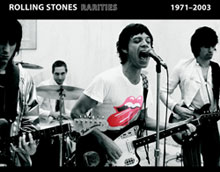
Another famous archetypal image in popular music, “Mack the Knife,” is something of a “moritat” or a medieval version of the murder ballad that was typically performed by strolling minstrels. “Moritat” comes from “mori” meaning "deadly" and tat meaning "deed." In Brecht’s Threepenny Opera, the moritat singer with his street organ introduces and closes the drama with the tale of the deadly Mackie Messer, or Mack the Knife, a character based on the dashing highwayman Macheath in John Gay's The Beggar's Opera.
It’s the cathartic quality of most blues songs that I’m really interested in, however. The blues offers a release from the trials of life by offering up an example of something much worse. As with Greek tragedy (think Oedipus Rex, wherein the protagonist marries his own mother and blinds himself after realizing his mistake), the blues makes us feel a little better about our own lives.

Of all blues singers, Big Mama Thornton and Robert Johnson notwithstanding, I still get the chills when I hear Janis Joplin’s voice. “Cry Baby” is like an extended diary entry or an EKG of Joplin’s psychological state when the song was recorded. It’s effective and really resonates because of its cathartic quality. Janis goes on a trip of realization and in the process takes the audience with her. The pathos in her voice is so convincing that the listener momentarily forgets about everything but the experience she is relating and ultimately experiences ekstasis. It’s that ability to use tragedy to transform an audience that’s the stuff of rock legend and such a rare quality in music these days.
In 1954 Muddy Waters had a hit with the Willie Dixion song "Hoochie Coochie Man" and ever since I first heard this song I wondered what Muddy Waters meant when he sang that line "I got the John the Conqueroo." It is part of the verse that goes
…
"I got a black cat bone, I got a mojo too,
I got the John the Conqueroo, I'm gonna mess with you,
I'm gonna make you girls, lead me by my hand,
Then the world will know, the Hoochie Coochie Man."
According to Answers.com
"John the Conquer root, refers to a number of roots to which magical powers are ascribed in American folklore, especially among the hoodoo tradition of folk magic among African Americans. The root, in turn, is named after a folk hero called High John the Conqueror."

That brand of mysticism in the best blues numbers elevates the singer to the level of mythmaker and the exploits of the great blues artists to the stuff of legend. Robert Johnson spent many nights wandering alone down dirt roads looking for the next juke joint and probably one step ahead of the hell hounds on his trail. Of course, the “hell hounds” could have been the bloodhounds of a local sheriff but could also have been a metaphor for all the troubles that probably followed any man of his musical stature during that time period. Blues singers beginning their careers often wandered on foot between gigs and thus were often blamed for the temporary chaos that erupted when they hit town. Songs such as “Staggolee” and “Midnight Rambler” paint the portrait of men on the wrong side of the law whose reputations became the subject of folklore.

Another famous archetypal image in popular music, “Mack the Knife,” is something of a “moritat” or a medieval version of the murder ballad that was typically performed by strolling minstrels. “Moritat” comes from “mori” meaning "deadly" and tat meaning "deed." In Brecht’s Threepenny Opera, the moritat singer with his street organ introduces and closes the drama with the tale of the deadly Mackie Messer, or Mack the Knife, a character based on the dashing highwayman Macheath in John Gay's The Beggar's Opera.
It’s the cathartic quality of most blues songs that I’m really interested in, however. The blues offers a release from the trials of life by offering up an example of something much worse. As with Greek tragedy (think Oedipus Rex, wherein the protagonist marries his own mother and blinds himself after realizing his mistake), the blues makes us feel a little better about our own lives.

Of all blues singers, Big Mama Thornton and Robert Johnson notwithstanding, I still get the chills when I hear Janis Joplin’s voice. “Cry Baby” is like an extended diary entry or an EKG of Joplin’s psychological state when the song was recorded. It’s effective and really resonates because of its cathartic quality. Janis goes on a trip of realization and in the process takes the audience with her. The pathos in her voice is so convincing that the listener momentarily forgets about everything but the experience she is relating and ultimately experiences ekstasis. It’s that ability to use tragedy to transform an audience that’s the stuff of rock legend and such a rare quality in music these days.
Friday, January 12, 2007
Fast Talking Woman

Having never been to Naropa, I don't have much of an opinion about the goings-on there, but I did want to take a second to say I think Anne Waldman's energy is amazing. I was rereading some of the Angel Hair anthology the other day and considering the course of her poetic career in awe. We need an attempt to address the world's problems more directly and Waldman's work provides a blueprint for that. Rachel Blau DuPlessis says it best.
"Anne Waldman’s work in poetry exists at the intersection of activist passion, gender critique and wariness, and long poem ambitions. She is at root inspired by an Olsonic ambition to speak the whole social fabric as an incantatory, analytic cantor in shamanic voice. She is someone who can inhabit her own culture and play among a multiple of global sites with Blakean transformative lust."
Thursday, January 11, 2007
Parade of Hours
Salmon hands, Pacific hands, Pisces-born, there are flies in my sleep.
My emerald speaks in such soothing tongues, her eyes dance with lust, but I cannot keep her.
There must be some chains that keep my coins; I cannot reach them.
Each of your fingers is a stalk of fire.
My love for you is a new arithmetic. It knifes me with a smile.
The parade of hours knows only your name, but I am a pair of mirrored dice.
I am the martyr of damp sheets and trees peopled with whispering stars.
I am nailed to laughing truth and cannot street.
Tomorrow is a theater, a priest, a patricide, champagne.
Trapped inside my poem there is no voice, only the greenest breezes.
I love the storm tumbling inside me.
I’ll set a trap for patience.
Subscribe to:
Posts (Atom)